
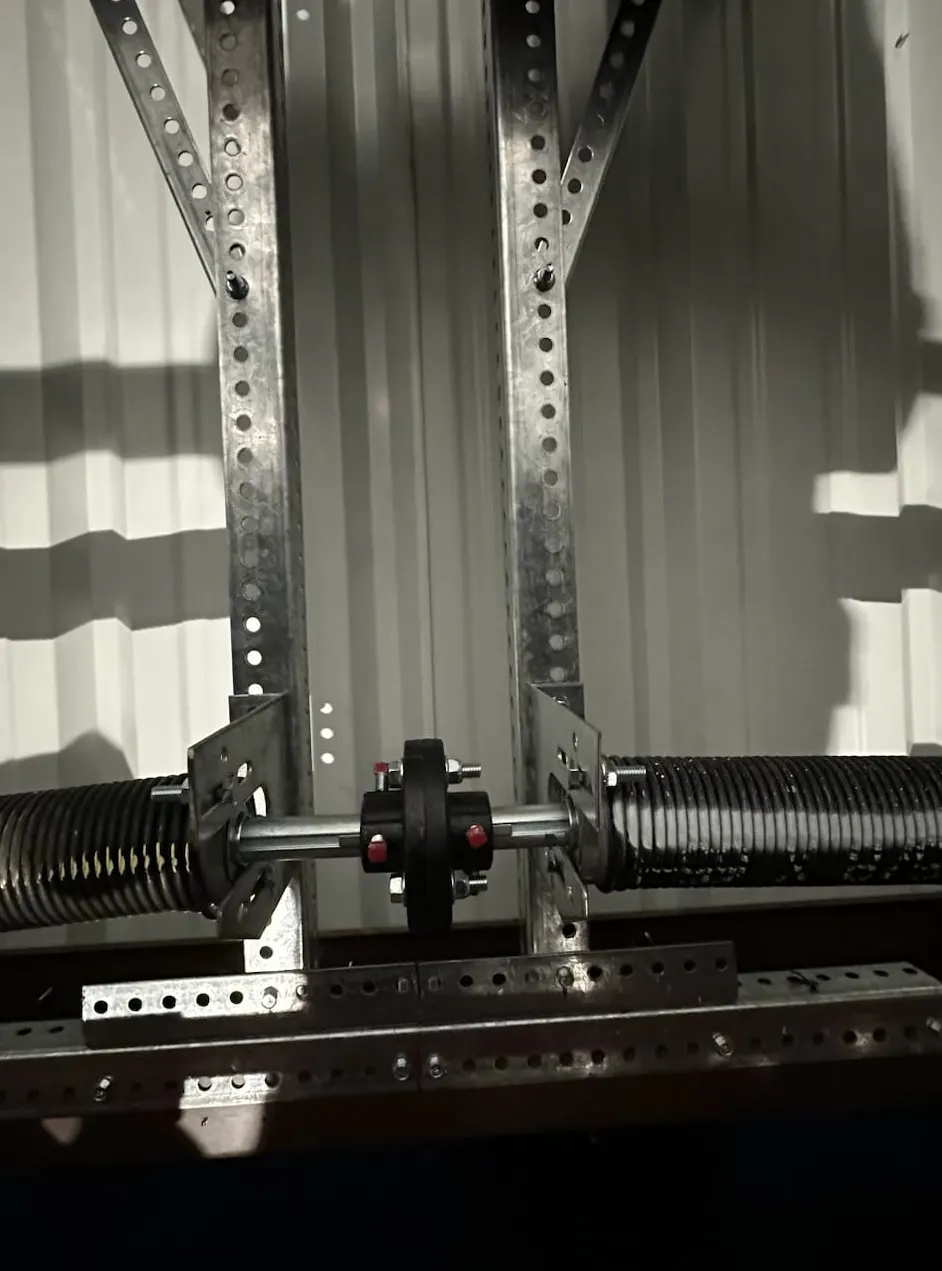
The Mistake That Feels Reasonable but Isn't
It usually starts with a loud bang in the garage, followed by a door that won't budge or crashes down fast. A quick search turns up a ten-minute video showing someone swap a torsion spring with a couple of steel bars and a ladder, and it looks straightforward. The spring itself costs far less than a service call, often in the range of $30 to $100 for the part alone, so the math seems obvious. The door looks like a simple mechanical system: a spring, some cables, a few bolts. It's tempting because nothing about it looks electrical or dangerous, and the video made it look like changing a tire.
What that video doesn't show well is how much energy is actually stored in that spring, or what happens the moment it lets go in the wrong direction.
What Actually Goes Wrong
A standard torsion spring on a residential door is wound under enormous tension, enough to lift 150 to 400 pounds of door. That tension has to go somewhere when it's released, and if it's released in an uncontrolled way, it goes into whatever is nearby.
- Winding bars slipping out of the cone under load, snapping back with enough force to break fingers, fracture wrists, or strike the face.
- The spring itself failing mid-wind, sending metal fragments and the winding cone across the garage like shrapnel.
- Extension springs under stretch letting go without a safety cable installed, which can launch the spring or attached hardware several feet.
- The door itself dropping while someone's hand, arm, or head is in its path, because a cable or spring that was holding tension let go unexpectedly.
These aren't rare freak accidents. Garage door springs are one of the most common sources of home-repair injuries that involve orthopedic surgery, deep lacerations, or eye trauma, precisely because people underestimate stored tension until it's already released.
What Actually Prevents It
If you understand torsion spring systems and have the right tools, professionals do this safely every day. The difference is almost always in these specifics:
- Identify the spring type first. Torsion springs (mounted on a bar above the door) and extension springs (stretched along the horizontal tracks) require completely different handling, and using the wrong method on the wrong type is where a lot of injuries start.
- Use properly sized winding bars, not screwdrivers or improvised tools. A bar that doesn't seat fully in the cone can slip under load.
- Never stand in the spring's plane of motion. If it fails, it fails along the line of the bar, and standing to the side instead of in front of it is a small habit that prevents serious injury.
- Fully relieve tension in quarter-turn increments before loosening any set screws, and never remove them while the spring still holds a partial wind.
- Never work alone on a torsion spring job. Having someone nearby who can call for help if something slips isn't optional.
- Check the door's balance and weight distribution first. If a panel is dented from hail or wind debris, the door may already be unevenly loaded, which changes how the spring behaves under tension in ways a video won't account for.
Why Local Conditions Make This Trickier
In this part of Texas, long hot summers put steel springs through repeated expansion and contraction, and sudden storms with wind and hail can dent panels or knock tracks slightly out of alignment without it being obvious from the ground. Occasional winter ice can also cause springs to bind or stick before release. Any of these can make a spring behave less predictably than it would on a brand-new, perfectly balanced door, which is exactly the kind of variable that turns a DIY project into an ER visit.
When to Call Argyle Garage Door
If your spring has broken, is sagging, or is making a grinding sound when the door moves, that's the point to call rather than reach for a wrench. Our spring replacement service includes checking the door's balance and cable condition, not just swapping the part, since a spring rarely fails on its own without a related cause. If the door has been working fine but you want to catch a failure before it happens, our garage door maintenance visits check spring tension, cycle counts, and wear points so you're not finding out the hard way.
If your garage door spring has failed or you want it inspected before it does, call Argyle Garage Door. We serve homes throughout Argyle, TX and the surrounding area, and we'll get it fixed safely and correctly.